GLP-1 Diet Plan: What to Eat & Avoid for Faster Weight Loss

Starting a GLP-1 medication can feel both hopeful and daunting at the same time. You may finally see the scale moving, yet worry about side effects, what you “should” eat, and how to protect your health long term. This guide is designed to support you with empathy, practical structure, and science‑based principles so you feel more in control rather than restricted.
Why food still matters on GLP-1s
GLP-1s reduce appetite and slow how quickly food leaves your stomach, which helps you eat less and feel fuller for longer. But they do not choose what you eat, protect your muscles for you, or guarantee that the weight you lose is mostly fat. The way you eat alongside your injection or tablet is what turns “weight loss” into healthier, stronger, sustainable weight loss.
For many people, appetite drops so sharply that it becomes easy to “forget” to eat or to snack on whatever is convenient. Over time, that can mean not enough protein, very low calorie intake, fatigue, hair shedding, or more nausea and constipation. Treating food as part of your treatment plan—not an optional extra—is a form of self‑care, not perfection.
“GLP-1 medications change how much you want to eat—but the way you eat determines how healthy, strong, and sustainable your weight loss will be.”
Core principles: kind, not perfect
Instead of aiming for a flawless “diet”, it helps to focus on a few non‑negotiables you can realistically keep up on your best and worst days. Three anchors matter most on GLP‑1s:
- Enough protein each day (roughly 1.0–1.5 g per kg of body weight, personalised with your clinician) to protect muscle and support recovery.
- Plenty of fibre and fluids to keep your bowels moving and your gut comfortable.
- Smaller, slower meals to work with delayed gastric emptying and reduce nausea, reflux and bloating.
If hitting all three feels overwhelming, it is completely valid to start with just one—for example, “I will build every meal around a protein source,” and layer the rest later.
What to eat more often
Think of these foods as your “treatment partners”: they help the medication work with your body, not against it.
- Lean protein at each meal
Aim for foods like eggs, fish, skinless poultry, tofu, tempeh, Greek yogurt, cottage cheese, beans, lentils and quality protein shakes. These support lean mass, keep you fuller for longer and stabilise blood sugars. - High‑fibre plants
Non‑starchy vegetables (broccoli, spinach, courgette, peppers, carrots), legumes, and fibre‑rich fruits like berries, apples and pears help with satiety and bowel regularity. Starting with cooked veg and peeled fruit can be gentler if your stomach is sensitive. - Whole grains and slow carbs
Small portions of oats, quinoa, barley, brown rice, and wholegrain breads provide steady energy without sharp glucose spikes. On days with very low appetite, even half‑portions are acceptable—you are not failing if you eat less than a textbook serving. - Healthy fats in modest amounts
Olive oil, avocado, nuts, seeds and oily fish contribute to hormone health and satisfaction. Keeping portions modest (e.g. a small handful of nuts, 1–2 teaspoons of oil) can help avoid feeling overly full or nauseated.
What to limit or avoid (without shame)
Some foods are more likely to trigger or worsen GLP‑1 side effects, especially nausea, vomiting, reflux, or upper‑abdominal discomfort. Limiting them is about comfort and safety—not morality.
- Large, heavy, high‑fat meals
Fried foods, creamy sauces, greasy takeaways and very fatty cuts of meat can significantly worsen nausea and delay stomach emptying even further. If you do choose them occasionally, smaller portions and slow eating can make them more tolerable. - Sugary, ultra‑processed foods and drinks
Sweets, pastries, sugary cereals, regular soft drinks and energy drinks add calories with little satiety and may aggravate GI symptoms. Rather than banning them, it can help to “contain” them—e.g. one small, planned portion after a protein‑rich meal. - Rapid eating and large volume in one sitting
Eating quickly or having very large meals can lead to an uncomfortably full, “stuck” feeling or vomiting on GLP‑1s. Using smaller plates, putting cutlery down between bites and stopping at “comfortably satisfied” are small but powerful tools. - Carbonated drinks (for many people)
Fizzy drinks can increase bloating and discomfort by adding extra gas when your stomach is already emptying more slowly. Some people tolerate them well; if you do not, switching to still water or herbal teas is a gentle adjustment.
A gentle sample day
This is an example, not a prescription. On lower‑appetite days, you might move to “mini meals” or shakes instead of full plates.
- Breakfast (or first meal)
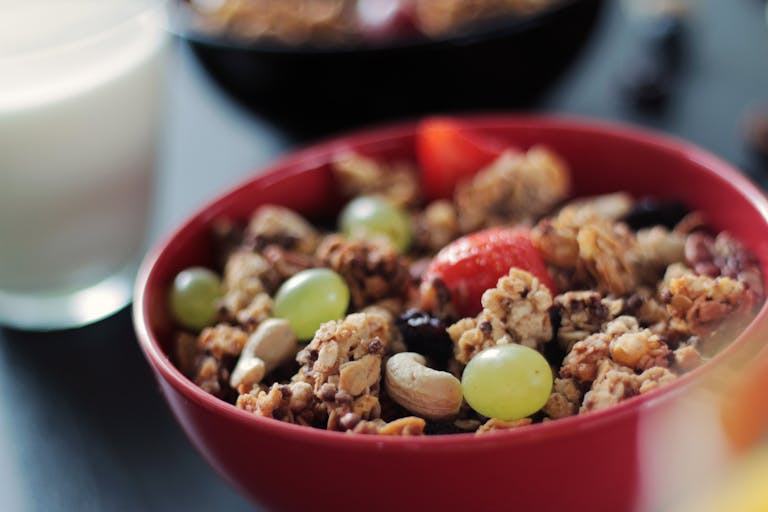
Greek yogurt with berries and 1–2 tablespoons of oats or chia seeds, aiming for ~20–25 g protein. If mornings are nauseating, a small portion eaten slowly, or a protein shake sipped over an hour, is acceptable. - Midday
Grilled chicken or tofu salad with mixed non‑starchy vegetables and a small portion of quinoa or brown rice. Dressing with a modest amount of olive oil keeps taste and satisfaction without overwhelming your stomach. - Evening
Baked fish or lentil stew with roasted vegetables; add a small serving of whole grains if hunger allows. If appetite is low, focusing on the protein and vegetables first is a reasonable compromise. - Snacks (if needed)
Options include a boiled egg, a stick of cheese, a small pot of yogurt, hummus with vegetable sticks or a half protein shake. These can be especially useful on dose‑increase weeks when full meals feel tough.
Supporting your body through side effects
Experiencing nausea, constipation, or fatigue does not mean you are doing something wrong; these are common and usually manageable.
- Nausea
Smaller, more frequent meals; bland foods (e.g. toast, crackers, plain rice), cold or room‑temperature options, and avoiding strong smells often help. Staying upright after eating and avoiding lying flat can also reduce reflux‑type discomfort. - Constipation
Many people need extra fibre, more fluids and gentle movement (like walking) once on GLP‑1s. Introducing fibre slowly and considering a clinician‑approved laxative if needed is a valid medical decision, not a failure of “willpower”. - Fatigue or hair shedding
These can reflect low protein or very low total calorie intake. Checking in with your prescriber or dietitian, increasing protein and ensuring you are not under‑fuelled are important next steps.
Protecting muscle and long‑term health
GLP‑1s can reduce both fat and lean mass; protecting your muscles is one of the best investments in your long‑term health, mobility and metabolic rate. Nutrition and movement work together here.
- Strength or resistance training 2–3 times a week (using bodyweight, bands or weights) helps preserve muscle while you lose weight.
- Pairing this with adequate daily protein and not going to extremes with calorie restriction improves the chances that the weight you lose is predominantly fat.
“When patients lose weight on GLP-1 therapy, preserving muscle is essential. Strength training two to three times per week is one of the most effective ways to protect lean mass and maintain long-term metabolic health.”
If exercise feels intimidating right now, starting with 5–10 minutes of light activity most days—such as walking or simple home exercises—is still meaningful. Progress can be gradual; your worth is not defined by your workout intensity.
Being kind to yourself on this journey
Many people on GLP‑1s feel guilt about “needing” medication, or worry they are taking an “easy way out”. In reality, obesity and weight‑related conditions are driven by complex biology, environment and lived experience; using evidence‑based treatment is a responsible health decision.
There will be days when you eat in a way you did not plan or side effects feel overwhelming. That does not undo your progress or mean you have failed. Coming back to your next meal, your next dose of self‑care, is what truly shapes your long‑term results.
References
- Cleveland Clinic. (2025, June 10). GLP-1 diet: What to eat & avoid. Cleveland Clinic. https://my.clevelandclinic.org/watch/glp-1-diet
- Healthline. (2024, March 4). GLP-1 diet: Foods to eat and foods to avoid. Healthline. https://www.healthline.com/health/nutrition/glp-1-diet
- Ohio State University Wexner Medical Center. (2024, September 16). Taking a GLP-1? Here are foods to limit — and what to prioritize. Health & Discovery, The Ohio State University. https://health.osu.edu/wellness/exercise-and-nutrition/glp1-foods-to-limit
- Mehrtash, F., Manson, J. E., & Dushay, J. (2025). I am taking a GLP-1 weight-loss medication—What should I know? JAMA Internal Medicine. Advance online publication. https://pubmed.ncbi.nlm.nih.gov/40658429/
- Harvard T.H. Chan School of Public Health. (2025, August 27). Diet, exercise still important when taking weight-loss medication. Harvard T.H. Chan School of Public Health News. https://hsph.harvard.edu/news/diet-exercise-still-important-when-taking-weight-loss-medication/
- HealthCentral. (2025, March 28). GLP-1 diet: Foods to eat and avoid on weight loss medication. HealthCentral. https://www.healthcentral.com/condition/obesity/glp-1-diet
- For Hers. (2025, January 15). GLP-1 diet plan: Things to consider. Hers. https://www.forhers.com/guides/glp1-diet-plan
- Nimblerx. (2024, December 31). Foods and diet choices to avoid when taking GLP-1 medications. NimbleRx. https://www.nimblerx.com/articles/foods-and-diet-choices-to-avoid-when-taking-glp-1-medications